週
부수: 辶
획수: 11획
週 has the meanings period and week.
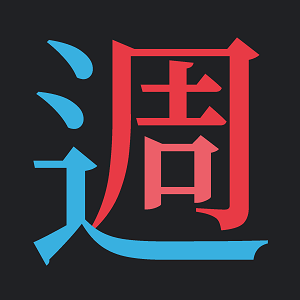
週 = 周 + 辶
X = semantic/phonetic + semantic
• 周 originates from  meaning ‘field’ (see below).
• 辶 is an abbreviation of 辵 and represents the meaning ‘to walk’.
Evolution:
週 = to return ➔ to go around ➔ cycle ➔ period of time ➔ week
週 = to return ➔ to go around ➔ circle ➔ complete
周 =  + 口
+ 口
• is an earlier form of 田 meaning ‘field’. Think of how ‘going around’ a designated farm boundary defines its ‘circumference’.
• 口 is a distinguishing mark added to when the original became used as a proper noun.
辵 = 彳 + 止
• 彳 is taken from 行 meaning ‘road intersection’.
• 止 depicts a foot and represents ‘walking’.
Together they give 辵 the meaning ‘walking down the street’.
Over time, the components 彳 and 止 merged into 辵.
In 週, they were abbreviated to 辶.
Mnemonic
Look at the historical forms to see how became the cross-shape in 周 and how the box 口 was added below this.
Imagine a farmer walking 辶 around the circumference of his rice field . He does this once per week 週 to check on his farm.
Vocab
| 週期 | 주기 | interval; cycle |
| 週期的 | 주기적 | periodic |
| 週期性 | 주기성 | periodicity |
| 一週年 | 일주년 | first anniversary |
| 週期律表 | 주기율표 | the periodic table |
| 週 | 주 | week |
| 週末 | 주말 | weekend |
| 週日 | 주일 | a week |
| 週間 | 주간 | a week |
| 週中 | 주중 | weekdays |
| 週休 | 주휴 | non-working day |
| 每週 | 매주 | every week |
| 來週 | 내주 | next week |
| 隔週 | 격주 | every other week |
| 一週日 | 일주일 | one week |
| 週刊紙 | 주간지 | weekly news paper |
Other resources
Image searches
Google
Bing
Yahoo Japan
Baidu (click 图片)
Sogou
Pinterest
Flickr
CJKV
CJKV Dict
Wikitionary
Unihan Database
Korean
Chinese
Written Chinese
Arch Chinese
ZDic
CC-Canto
Chinese Text Project
The Chinese University of Hong Kong (etymology)
Chinese Boost
Japanese
Takoboto
Jisho
JLearn.net
Sakura
The Kanji Map
Sentence Search
Immersion Kit
Vietnamese
Bibliography
— Daum 사전, [s.v. 週].
— Outlier Dictionary of Chinese Characters, [s.v. 週, 周, 辶, 辵, 彳, 止].
— Seely, C., Henshall, K.G., & Fan, J. (2016). The Complete Guide to Japanese Kanji: Remembering and Understanding the 2,136 Standard Japanese Characters, [s.v. 157]. Singapore: Tuttle Publishing.